


-
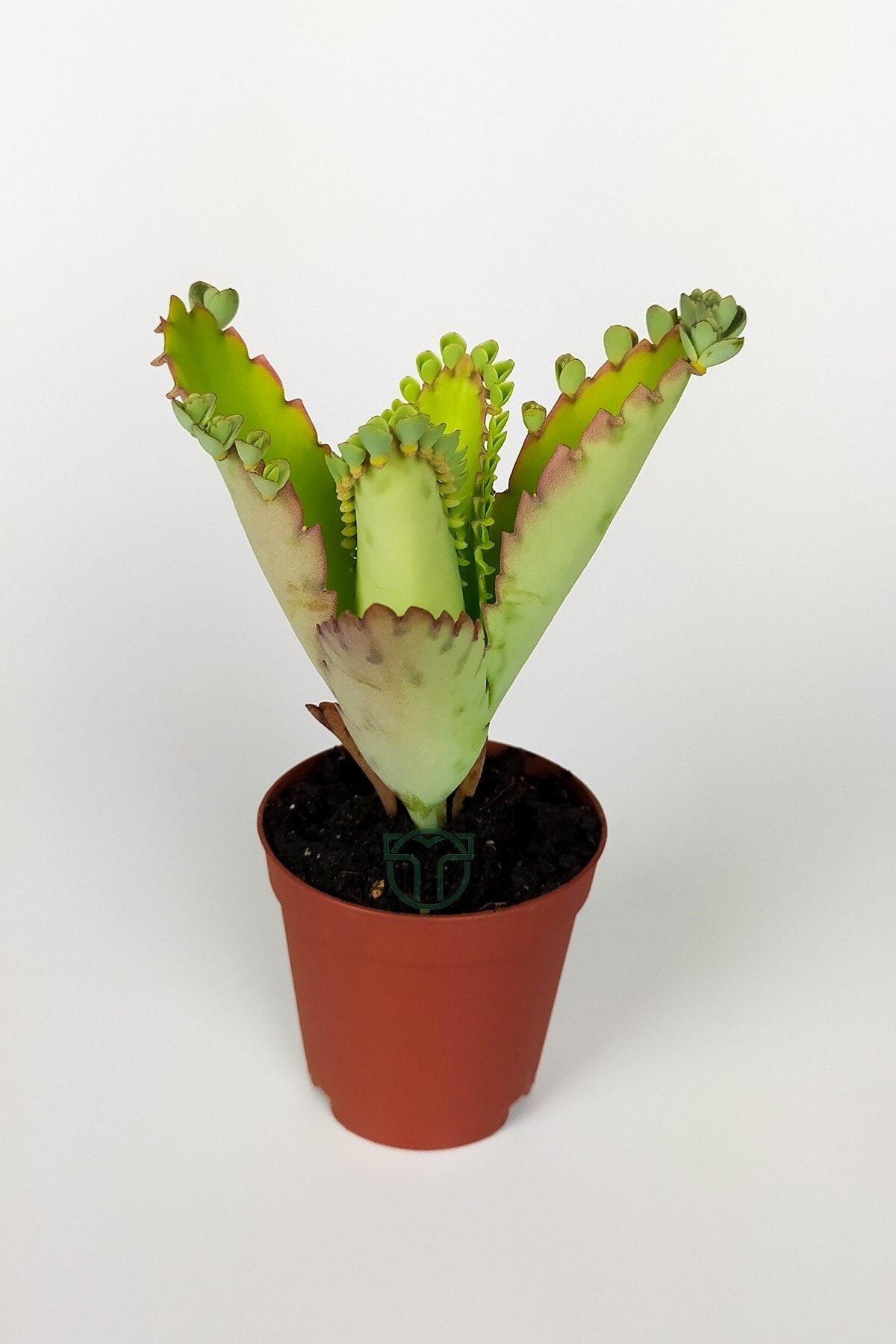
Love's Tear Flower Kalanchoe Daigremontiana Green Flower 5.5 cm Potted Photos are our own shot and the products you see in the picture will be sent exactly the same.
-
We carefully select and ship the largest and fuller products.
-
With our special packaging method, the products are delivered to you without any problems.
-
The flower of love, a member of the Crassulaceae family, can be easily grown in any home and environment. Its homeland is Madagascar, also known as the tear flower of love. The British call this flower “mother of millions”. It is a succulent type plant. Like all succulent plants, its leaves are fleshy. The flower of love tears, which is very easy to care for, is an expansive species. It is a cheeky plant, so to speak. It does not distinguish the soil type and does not like excess water. This plant has lost its seed feature
-
it multiplies by leaving its sprouts where its roots are. You can also grow the plant by cutting a branch and planting it in another pot. The flower of tears of love can be grown both indoors and outdoors. But we have to say that it grows much faster and healthier outdoors. Tears of Love Flower care For this plant, you should prefer soil that does not retain water. It shows its best development in cactus soil. If you wish, you can add some sand to the soil for a better drainage. If you want, you can prepare drainage soil by mixing sand, peat algae, vermiculite, perlite and coconut shell in equal amounts. The soil should be changed every 2 years. The flower of love's tears needs drainage. Pots with multiple, wide vents are the ideal choice for this plant. This flower is an expansive species. In fact, once you plant it, we can say that there is no salvation from it again. Because it can multiply thousands of times from its leaves. Therefore, we recommend that you clean the puppies that start to sprout in the soil from time to time so that the pot does not shrink. Tears of Love Flower irrigation This plant is drought resistant. However, we should underline that it shows a much more lively and beautiful development with regular irrigation. The soil of the flower should be watered as it dries. Therefore, by frequently checking the soil
•
•
•
•
•
•
•
•
•
•

favorite
account_circle
shopping_bag
Cart Catalogue
