


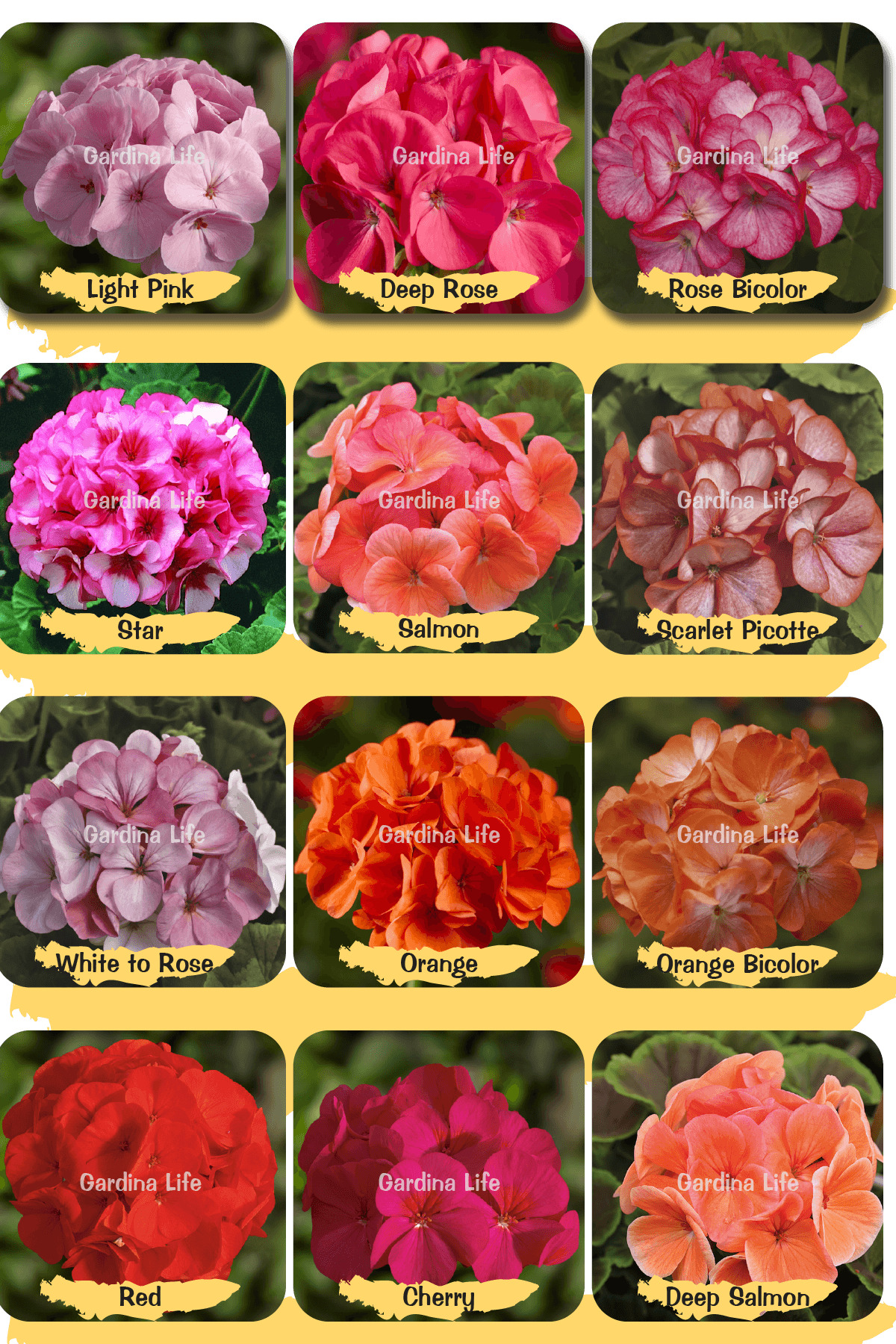
-
PACKAGE CONTENT 10 DIFFERENT COLORED GERANIUM SEEDLINGS Care of the Geranium Plant Geranium is one of the favorite ornamental plants of balconies and gardens with its durable structure, fragrant leaves and long flowering period.
-
When the right care is provided, it can bloom continuously from spring to the end of autumn.
-
Geraniums are sun-loving plants.
-
Direct sun exposure for at least 4-6 hours a day increases flowering.
-
The plant grows in insufficient light, but the number of flowers decreases.
-
Soil selection is very important
-
light, permeable and organic matter-rich soils should be preferred.
-
Irrigation is one of the most critical points of geranium care.
-
Irrigation should be done as the upper part of the soil dries, water should not be allowed to accumulate in the pot plate.
-
Excessive irrigation can cause root rot.
-
While the frequency of irrigation is increased in summer, it should be significantly reduced in winter.
-
Liquid flower fertilizer given every 15-20 days during the flowering period allows geranium to bloom more abundantly and vibrantly.
-
Regular cleaning of fading flowers and drying leaves helps the plant direct its energy to new flowers.
-
Although geraniums are sensitive to frost, they can withstand cool environments for a short time.
-
Geranium Care in Turkey by Regions Marmara Region The temperate climate is quite suitable for geranium.
-
It grows easily on sunny balconies and gardens. Regular irrigation should be done in summer. It should be taken to sheltered areas on days with frost risk in winter. It develops healthily outdoors from spring to autumn. Aegean Region is one of the most ideal regions for Sardinia.
-
Areas with plenty of sunshine should be preferred. Irrigation frequency should be increased on hot days in summer. Since the soil can dry quickly, moisture control should be performed. Areas with air circulation should be preferred. Mediterranean Region Careful maintenance is required due to high temperatures.
-
Places that are sunny but not exposed to excessive heat at noon are suitable. Irrigation should be done early in the morning or in the evening. Growing in pots provides an advantage in terms of temperature control. In summer, the soil should not be dried too much. Black Sea Region Humid climate may pose some disease risks.
-
Areas with sun but airflow should be preferred. Irrigation should be reduced in extreme rainy periods. Drainage of the soil should be absolutely good. Fungal diseases should be checked on the leaves. Central Anatolia Region Terrestrial climate is partially suitable for geranium.
-
Sunny and wind protected areas should be selected. Regular irrigation is important in summer. Attention should be paid to night temperature drops. It is usually taken indoors in winter. Eastern Anatolia Region Due to the cold climate, limited cultivation is carried out.
-
It is recommended to grow it in pots. It can be kept outdoors in summer. It must be taken indoors in winter. Irrigation must be done in moderation. Southeastern Anatolia Region Hot and arid climate requires special care.
-
Areas that receive sun but are protected from extreme temperatures are suitable Irrigation should be done regularly and in a controlled manner. The moisture holding capacity of the soil should be increased. It should be directly protected from the sun at noon. # # # Geranium Flower – Agricultural Pests * * *Aphids: * * It causes yellowing and twisting by absorbing sap in young leaves and shoots.
-
Whitefly: * * Appears under leaves, causes weakening of the plant.
-
Red spider: * * Forms yellow spots and drying on leaves in hot and dry environments.
-
Trips: * * It causes discoloration and deformity in flowers and leaves.
-
Geranium butterfly (Cacyreus marshalli):* * Causes serious damage by drilling holes in the trunk and buds.
-
Protective Measures: * * * Plants have to be checked regularly.
-
Dry and diseased parts have to be cleaned.
-
Excessive irrigation and frequent planting have to be avoided.
-
Appropriate agricultural control has to be applied when necessary.
•
•
•
•
•
•
•
•
•
•

favorite
account_circle
shopping_bag
Cart Catalogue
