


-
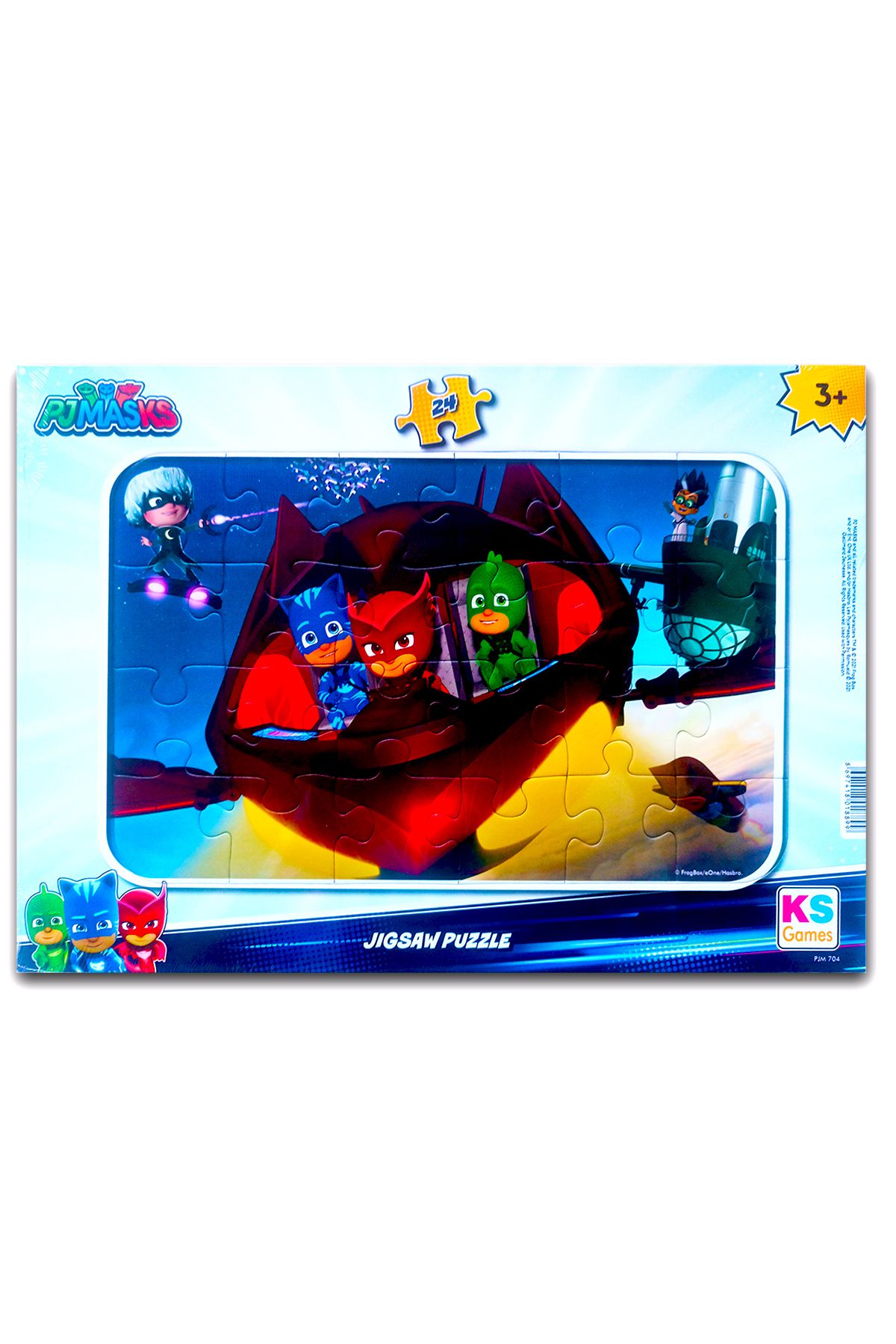
PJ MASKS Pajama masks Frame Puzzle/Puzzle 24'piece 1. Class Cardboard 24 Piece Acquisition Hand-eye Coordination Attention Comprehending the Part-All Relationship Small Muscle Development Self-Confidence Social Adaptation Analysis-Synthesis Problem Solving Multiple images of the product are available. Any of the images can be sent according to the stock status. In particular, puzzles are a very important activity for children's mental, physical, social and emotional development.
-
It can be defined as the pieces that seem to be mixed, meaningless and independent of each other being brought together and forming a integrity during the construction phase. The process of creating this integrity is a situation that requires mental skills. In this respect, the puzzle contributes to the mental development of children and provides the formation of the part-whole relationship. It also has positive gains in terms of attention and perception development, shape-ground perception, omnipresence, reasoning-comparison, classification-sorting, analysis-synthesis, problem solving, trying alternatives, producing solutions, similarity-difference, hand-eye coordination, movement time study, analytical thinking, reasoning, integration-matching-consistency skills. In order to do the puzzle, the child needs to work his/her small muscles. Repeated exercises make the muscles strong and help reinforce that behavior and support its physical development. Completing the puzzle means a great victory for the child, and this success is an important contribution to his/her self-confidence. This aspect of the puzzle also contributes to the emotional development of the child. Puzzles are also a treasure in social development as they strengthen skills such as curiosity-discovery, productivity, patience, ability to do independent work, socialization, and focus on the goal. Children 12-18 months three- to four-piece puzzle
•
•
•
•
•
•
•
•
•
•

favorite
account_circle
shopping_bag
Cart Catalogue
